The Balance of Nature: Companion Planting
One way to keep you garden healthy and reduce insect problems is to use companion planting. There are plants that grow well together, plants that repel insects, plants that repel other plants, and plants that improve the soil. Probably the most well-known companion planting is the Three Sisters Garden. The best way to learn about all of these is to read a few books on it, my favorite is: Carrots Love Tomatoes.

Marigolds are one of those beneficial plants it seems everyone knows about. Marigolds also deter nematodes that attack potatoes & strawberries. They do this by producing a chemical in the roots, this chemical kills the nematodes when it goes into the soil. It is produced slowly so the marigolds must be grown all season long. Marigolds also help tomatoes produce better, they help deter the Mexican bean beetle, and they help deter weeds such as bindweed, ground elder, and ground ivy. The older heirloom varieties are considered the best.

Some plants attract beneficial insects to your gardens and some deter bad insects. For example: carrots suffer from the carrot fly and onions suffer from the onion fly. However, if you plant carrots and onions together the smell of each plant makes it so that neither insect attempts to lay their eggs on the other plant.

Another way that beneficial plants work in the garden is by improving the soil. It is well known that legumes add nitrogen to the soil, that’s why they can be used as a cover crop in your garden beds. Many of these plants accumulate minerals from the soil and these minerals are put back into the soil when you compost the plants. I keep 6 comfrey plants in my garden for this purpose. The leaves are cut several times each summer and used in the compost bins.

A few more examples of companion planting:
Plant garlic with roses to protect them from aphids & other pests.
Nasturtiums keep broccoli free of aphids.
Bush beans do well when planted with celery.
Pole beans do not do well with beets.
Carrots help peas grow better.
Castor beans and foxglove repel deer.
Geraniums repel cabbage worms.

One thing to remember about this and all organic methods is that they are not instant like chemical methods often are. They are however better for your garden in the long run. I’ve had great luck with marigolds in my garden beds and by growing basil and other herbs among my vegetables.
So what kinds of companion planting work for you?
Share this:

The Balance of Nature: Bugs, Good and Bad
The insects world is quite an amazing thing, there are so many of all shapes, sizes and colors.
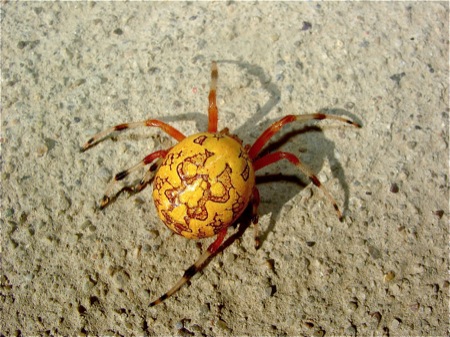
Insects can be good or bad; spiders are good, aphids are bad (I realize spiders aren’t technically insects, but we’re going to include them). The good insects are predatory and they feast on other insects, these are the kinds of insects you want to have around.

Some bugs are very beneficial, but they creep us out – spiders are the main culprit here. I have made peace with all of the big wolf spiders that live around our home (and boy can these guys get HUGE). I have to remember that they eat tons of bad insects.

You can order beneficial insects from various dealers and release them on your property. Certain insects can really help deal with an infestation of another insect. For example: Ladybugs LOVE aphids. If you have an aphid problem, order some ladybugs or some green lacewings. Here is some great information about the best predatory insects for your gardens.


Insects are also beneficial to the gardens because many of them are pollinators. Pollinators are great in the garden because they increase your crops.

There are all kinds of pollinators you can encourage in your gardens without actually having to keep bees. The easiest way is to buy a Mason Bee house to encourage these little orchard bees to reside on your property.
Do you welcome bugs into your gardens?
Share this:

The Balance of Nature: Growing Soil
SOIL (noun) – the portion of the earth’s surface consisting of disintegrated rock and humus.

Healthy soil is the foundation of a good garden. You can grow plants in bad soil but it will require tons of chemicals, and that’s not good for you or the environment. I believe real gardeners grow soil not plants. If we focus on growing good soil our plants will thrive!

We aren’t blessed with good soil here at Chiot’s Run. When we moved here 7 years ago the soil was in terrible shape. Years of chemicals and pesticides had left our flowerbeds a barren wasteland with few plants and not a beneficial insect or earth worm to be found. I wasn’t really in to gardening at that time, but I knew I needed to improve the soil if I ever wanted to have any flowers or plants. So we started our first compost pile and bought some organic chicken manure and worked it into the flowerbeds.

I’m glad I did that now, because even though our soil still has a long way to go, it’s beginning to become loamy and my plants are finally starting to flourish. I notice worms every now and then when I dig and other beneficial insects are returning.

So how do you improve your soil? There are many articles, books, and experts out there that will tell you to get a soil test done. I never have, I’m a bit of a minimalist when it comes to these kinds of things. I figure if people could do it years ago, I can do it now. I believe in working with the soil you have; adding good compost and feeding it well. There are ways to tell if your soil is deficient without a soil test.

First you want to figure out if you soil is clay, sandy, or loamy. It’s pretty easy to tell the difference, if it comes up in big chunks and gets hard as a rock when it’s dry, you probably have clay soil. If your soil has the same texture as your children’s sand box and it’s dry the day after a big rain, you probably have sandy soil. If your soil is dark brown, crumbly and stays moist but not too soggy, congrats, you have loamy soil. I have clay soil on my front hillside and sandy soil in my front flowerbeds.


The next thing you want to figure out is if your soil is acidic or alkaline. My soil is acidic, how can I tell? My first sign was the blue hydrangea. It’s the most beautiful shade of blue, hydrangeas only bloom this blue in acidic soil.

You can buy an inexpensive pH testing kit at your local garden center to test your pH. It’s simple, easy and fun! Do it with your kids for a science lesson. You can also send in a sample of your soil to a lab to get a complete test.

The best thing you can do for your soil is to avoid chemicals and pesticides and add compost, manure and other kinds of humus. You should stick to all-natural fertilizers made from rocks and minerals and natural materials (like blood meal, bone meal, greensand, wood ash, phosphate etc). Compost is by far the best thing you can add to your soil, and homemade is best because you know exactly what’s in it.
So are you a grower of soil? How do you feed & nourish your garden beds?
Share this:

The Balance of Nature
I saw this ladybug in my garden this past fall, so I snapped a photo. I thought it would be a great reminder of how all things in the garden work together.

Our garden health is like our personal health: maintaining a healthy foundation limits problems now and down the road. When you maintain healthy soil in your garden you’ll have healthy plants and you won’t have too many problems with insect infestations or plant diseases.

When bad insects come they are usually followed by the beneficial ones that prey on them. This is the balance of nature, and it’s important to keep that balance.

When we step in trying to fix things we perceive as problems with chemicals and quick fixes, we often only do further damage. Plant disease and insect infestations are often symptoms of a deeper problem. If we resort to the quick fix spray, often our problems will persist or multiply because we aren’t fixing the actual cause, we are only treating the symptoms.

Even so called green, non-toxic, and all natural products often kill the beneficial insects along with the bad ones. So what are we to do if we don’t want to upset this natural balance? We’ll be exploring this all this week here at Chiot’s Run.
Are you an organic gardener, or do you use chemical fertilizers, herbicides & pesticides?
Share this:

Quote of the Day
There is a very fine line between “hobby” and “mental illness.”
–Author Unknown

I had to laugh when I read this. I do have people tell me I’m weird because I like to grow some of my own food, keep bees and want to have pet chickens. I have to wonder though, with some of the hobbies people have, am I the weird one?
What do you think, hobby or mental illness?

